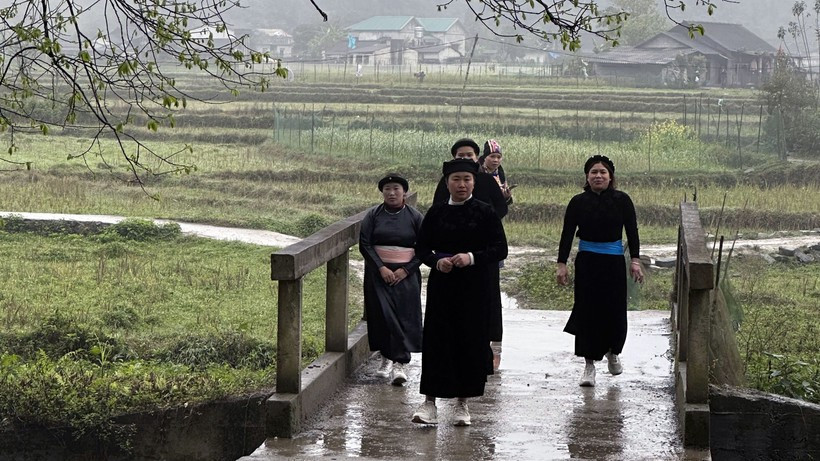
A flood-resilient concrete bridge in Ban Thang Hamlet, Tung Vai Commune, Quan Ba District, Ha Giang Province.
Vietnam is among the countries most severely affected by natural disasters, facing more than 20 types of disasters each year. In 2025 alone, powerful storms, extreme rainfall, and successive floods caused serious inundation across many localities. Thanks to the Government’s decisive direction, the synchronized engagement of the entire political system, and the proactive spirit of grassroots authorities, disaster prevention and control efforts have undergone a significant transformation.
Decision No. 553/QĐ-TTg, dated April 6, 2021, issued by the Prime Minister approving the Project on “Enhancing Community Awareness and Community-Based Disaster Risk Management through 2030,” represents a major policy initiative. It concretizes the strategic shift from passive response to proactive prevention, and from emergency relief to sustainable risk management.
After nearly five years of implementation, the Ministry of Agriculture and Environment has closely coordinated with ministries, sectors, and localities, receiving strong support from international organizations and active participation from the public. The project has widely promoted a proactive spirit of disaster prevention at the grassroots level, significantly strengthening the capacity of officials and communities in risk management.
During this period, the Ministry of Agriculture and Environment, together with local authorities and international partners, organized more than 743,000 training and communication sessions with over 8.4 million participants, along with nearly 1,200 drills. Millions of residents, students, and grassroots officials have been equipped with knowledge and response skills, enabling proactive prevention and contributing to minimizing disaster-related losses.
Building on the outcomes of community-based disaster risk management, the Ministry of Agriculture and Environment emphasized that localities should continue to adhere closely to the project’s objectives for the 2026–2030 period. Priority should be given to improving guidance materials, enhancing the capacity of officials and rapid-response forces, diversifying training formats, and mobilizing residents to directly participate in disaster prevention, response, and recovery efforts. This should be accompanied by the socialization of resources from the state budget, the Disaster Prevention and Control Fund, businesses, and the wider community.
At the same time, local authorities need to further raise community awareness of disaster risk reduction and guide residents in directly engaging in prevention, response, and recovery activities at the commune level.
Digital transformation is regarded as a key driver to improve effectiveness, timeliness, and adaptability. Therefore, during the 2026 rainy and storm season, communication efforts should continue to be implemented vigorously and creatively through press agencies and social media platforms, with well-planned and innovative investment to generate a positive ripple effect. Relevant agencies, in line with their assigned responsibilities, should also study and deploy community livelihood models in localities to help residents adapt to climate change and proactively prevent disasters.
In practice, the coordinated efforts of the entire political system have led to a clear shift in community awareness: from passive reaction to proactive prevention, from “responding after disasters occur” to “mitigating risks before they strike.” This transformation lays a solid foundation for Vietnam to move toward a safer, more adaptive, and sustainably developing society in the face of natural disasters.