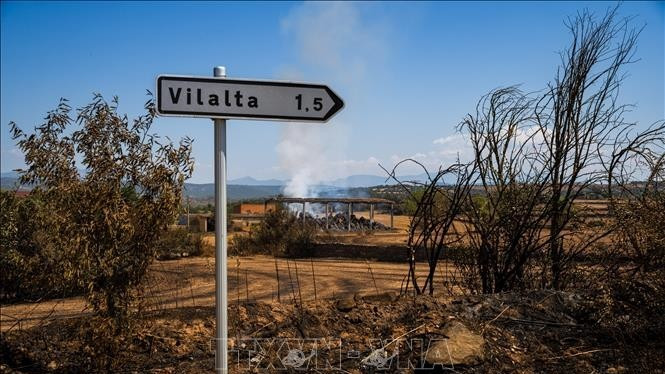
An area devastated by wildfires in Lleida, Spain. (Photo: Xinhua/VNA)
However, access to preventive and adaptation measures against natural disasters remains marked by worrying inequalities.
Just last week, Storm Kristin made landfall in Portugal, claiming at least five lives and causing severe damage to infrastructure. In response, the Portuguese Government announced an emergency support package worth €2.5 billion to address the consequences and assist affected residents. This once again highlights how extreme weather events such as powerful storms, floods, wildfires, droughts and intense heatwaves are becoming more frequent and severe, largely driven by human activity.
To assess the level of impact and communities’ adaptive capacity, the European Environment Agency (EEA) conducted an online survey of approximately 27,000 people across the 27 member states of the European Union (EU). The results show that as many as 80% of respondents have experienced at least one climate-related hazard, with heatwaves being the most common.
According to the EEA, over the past five years nearly half of respondents reported feeling excessively high temperatures inside their own homes (49.7%) and at their workplaces or schools (46.8%), while more than 60% said their surrounding living environment had become unusually hot. The situation is particularly severe in densely populated urban areas.
In addition to extreme heat, Europeans have also reported other impacts, including an increase in disease-carrying insects (34%), storm damage (14.1%), floods (11%) and wildfires (8%).
The survey also reveals significant gaps in household preparedness. The EEA noted that one in five respondents has no protective measures in place at home to cope with extreme weather. Such measures include sun shading, cooling systems, flood protection, rainwater storage, disaster insurance, backup power supplies or emergency kits.
Among the measures adopted, installing sun protection devices (49.7%) and improving insulation for walls and roofs (47.6%) were the most common. About 32.1% of respondents said they had invested in or upgraded ventilation or air-conditioning systems over the past five years. However, the EEA cautioned that low-income households face the greatest difficulties in implementing cooling and home protection measures, particularly during prolonged heatwaves.
Regarding risk-sharing mechanisms, around 40.8% of respondents reported having disaster insurance. Nevertheless, the EEA warned that this figure should be interpreted with caution, as many people may not fully understand the scope and terms of their insurance coverage.
On the authorities’ side, more than half of respondents said they had received warnings about extreme weather through text messages or official channels. In addition, 43% had been exposed to risk-prevention campaigns, while 42% had complied with water-use restrictions during periods of drought.
Against the backdrop of increasingly rapid and complex climate change, the EEA stressed the urgent need to scale up preventive and adaptation measures, ensuring that citizens can access solutions at affordable costs. The agency also called on European governments to develop fair and inclusive adaptation policies to safeguard the long-term welfare and prosperity of society as a whole./.