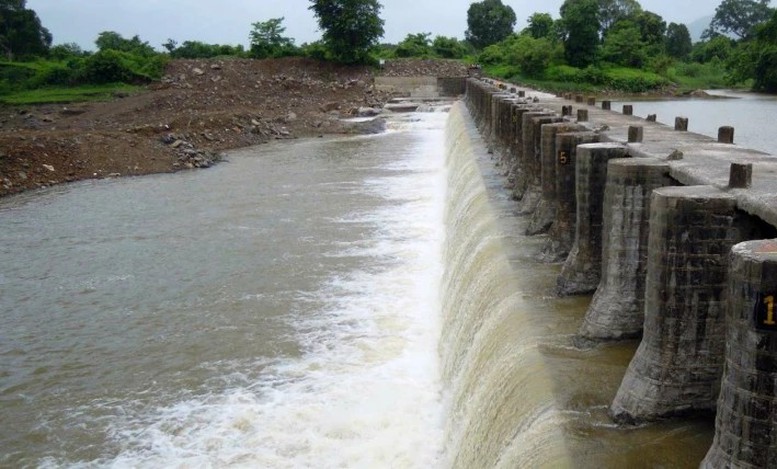
Integrated river basin management ensures national water security and enhances the efficiency of water regulation and distribution. — Illustrative Photo
Three Pillars of Innovation in Irrigation
According to a report by the Department of Science, Technology, and Training (Ministry of Agriculture and Rural Development - MARD), the S&T and innovation plan for irrigation, dykes, disaster prevention, and water resources for the 2026–2030 period is built upon major Party directives, sectoral development orientations, and urgent practical requirements. A notable shift is the transition from a "list-based" research approach to one driven by management and development needs, centering on output products and specific application addresses.
In the field of irrigation, research orientations for the coming period focus on three major pillars:
-
First, the development of Smart Irrigation: Leveraging Artificial Intelligence (AI), real-time data, IoT sensors, and hydrological-hydraulic forecasting models, the sector aims to build safe, flexible, and optimized operating systems. Priority will be given to large reservoirs and inter-regional systems that play key roles in water regulation and flood control for downstream areas.
-
Example: The inter-reservoir system on the Red River basin (including Hoa Binh, Son La, and Tuyen Quang) has integrated rainfall and flow data to support real-time operation, reducing downstream risks while ensuring power generation and water supply.
-
Second, reforming management mechanisms: Moving toward financial autonomy and regional reorganization. Modernization involves not just equipment installation but also standardizing operating procedures and applying digital governance and life-cycle asset management.
-
Third, investing in multi-purpose inter-regional projects: Forming water resource networks to resolve "hotspots" of clean water scarcity, particularly in the Mekong Delta and the Central Highlands. Large-scale saltwater intrusion control systems in the Southwest region have already demonstrated the vital role of smart technology in climate adaptation.
Integrated Water Resource Management by River Basin
Regarding water resources, the consistent orientation is integrated management by river basin to ensure national water security and enhance the efficiency of regulation and distribution.
The 2023 Law on Water Resources established the legal foundation for basin-level management, treating water as a finite, special resource that must be accounted for within the economy. Accordingly, the sector is accelerating the development of a National Water Resource Database, integrating meteorological, hydrological, usage, and discharge data.
Mr. Chau Tran Vinh, Director General of the Department of Water Resources Management (MARD), suggested focusing resources on interdisciplinary problems rather than spreading them thin. "Research must stem from practical management needs, focusing on water allocation under scarcity and supporting decision-making through digital tools," he stated.
Echoing this view, Mr. Pham Duc Luan, Director General of the Department of Dyke Management and Natural Disaster Prevention and Control, emphasized that S&T tasks must be closely linked to disaster monitoring, flood warning, and reservoir management.
Digital Transformation: Changing the Governance Method
From a scientific perspective, Prof. Dr. Tran Dinh Hoa, Director of the Vietnam Academy of Water Resources, proposed a comprehensive S&T program for the entire water and disaster prevention sector to mobilize interdisciplinary resources and implement solutions synchronously.
Deputy Minister of MARD Nguyen Hoang Hiep emphasized that the political and legal framework for innovation is now relatively complete. The current challenge is to raise awareness and responsibility during implementation.
According to the Deputy Minister, innovation must start with how S&T tasks are formulated. Projects should be designed in two directions: basic research for long-term strategies and applied research for urgent issues. The sector must focus on "bottlenecks" such as water quality, water-saving techniques, and enhancing forecasting capabilities.
"Digital transformation is not just about installing equipment or software; it is about changing the method of governance," the Deputy Minister noted. The ultimate goal must be to support decision-making and improve the operational efficiency of the entire sector.