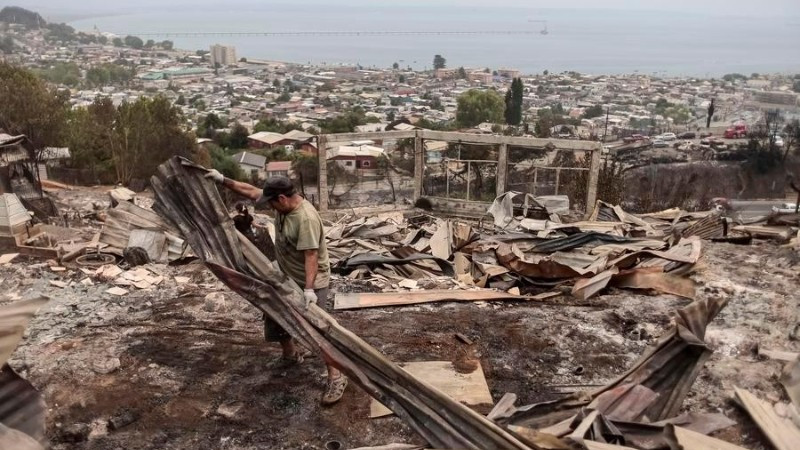
Residents clean up an area affected by wildfires in Penco, Biobío Region, Chile, on January 19, 2026. (Photo: Xinhua)
In its press release, WMO Secretary-General Celeste Saulo called for improving the accuracy and timeliness of weather forecasting, as well as increasing investment in early warning systems, warning that the long-term rise in global temperatures will lead to more frequent and more intense extreme weather events.
According to information compiled by WMO’s coordination mechanism from its member states and affiliated centers, both the Southern and Northern Hemispheres experienced widespread weather-related disasters this month.
In Australia, vast areas were affected by two heatwaves accompanied by dangerous bushfire conditions. Data from the Australian Bureau of Meteorology showed that the town of Ceduna in South Australia recorded a temperature of 49.5 degrees Celsius on January 26, setting a local record. The combination of extreme heat and strong winds pushed bushfire risk levels to extreme in many locations.
Chile and Argentina have also faced a combination of heatwaves, prolonged drought, and strong winds, triggering large-scale wildfires.
In the final week of January, a powerful winter storm swept across much of Canada and the United States, bringing widespread snowfall, sleet, and ice, along with bitter cold that posed health risks. The storm caused multiple fatalities, led to numerous flight cancellations, and left hundreds of thousands of households without power.
Russia likewise experienced unusually heavy snowfall, with the Kamchatka Peninsula recording snow depths exceeding two meters during the first two weeks of January, after having already seen accumulations of up to 3.7 meters in December last year.
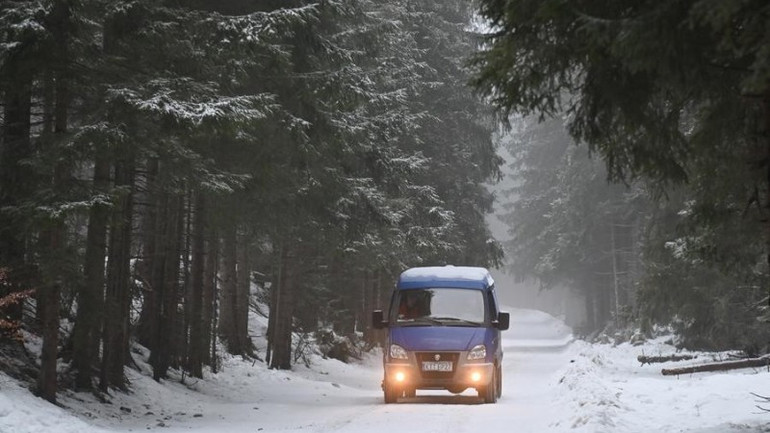
A forest road blanketed in snow in Tatra National Park near Zakopane, Poland, on January 29, 2026. (Photo: Xinhua)
These two months mark one of the snowiest periods on the peninsula since the 1970s, leaving the regional capital, Petropavlovsk-Kamchatsky, nearly paralyzed as massive snowdrifts buried vehicles and blocked access to buildings and critical infrastructure.
Across Europe, successive storms have brought heavy rainfall, strong winds, and high waves, disrupting transportation and causing flooding in multiple countries, from Ireland and the United Kingdom to Portugal, Spain, and throughout the Mediterranean region.
In southeastern Africa, weeks of heavy rain have caused rivers to swell and overwhelmed key reservoirs, pushing floodwaters into densely populated areas, with Mozambique among the hardest hit. Further heavy rainfall is forecast in the coming days.
Emphasizing that extreme weather consistently ranks among the top risks in the World Economic Forum’s annual Global Risks Report, Saulo noted that the number of people affected by weather- and climate-related disasters continues to rise each year, with the human toll clearly evident throughout January./.