Residents in many parts of Quang Tri Province are finding ways to adapt and stay safe amidst natural disasters, contending with fragmented terrain and unpredictable heavy rains and flooding. Following administrative boundary mergers that expanded the operational area—compounded by the deterioration of local loudspeaker systems—disseminating information on disaster prevention and preparedness in remote, mountainous border communes has become challenging. However, the formation of community groups using smartphones has created an effective "digital bridge," enabling disaster warnings to reach individual households as quickly as possible.
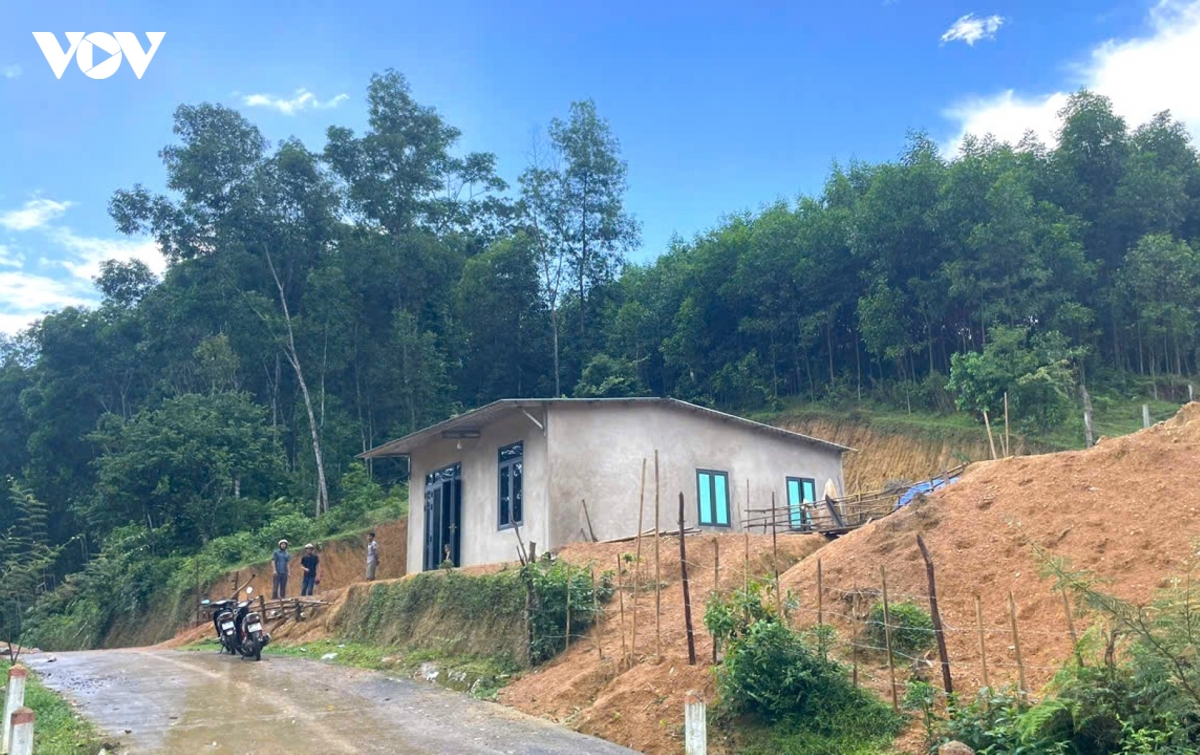
Tuyen Lam Commune covers a large area and is prone to being cut off by heavy rains, with many residential areas located in landslide-prone zones.
Ka Tang Village in Tuyen Lam Commune, Quang Tri Province (formerly part of Tuyen Hoa District, Quang Binh Province), was recently formed by merging Cao and Chuoi villages and is home to 125 households. The village faces a constant threat of landslides during the rainy and flood seasons.
Mr. Hoang Van Thuan, the head of Ka Tang Village, explained that while village leaders previously had to travel kilometers on foot—traversing hills and streams—to knock on every door and urge residents to evacuate, the widespread availability of internet infrastructure has now established a rapid communication network right at their fingertips.
"During the storm season, the greatest advantage of digital technology is the time saved. In the past, I had to walk to each household; now, residents are instantly informed via the village’s Zalo and Facebook groups. I call households directly if they haven't read the message, and I only visit their homes in person if I cannot reach them otherwise—this approach is both fast and ensures no household is overlooked," Mr. Thuan said.
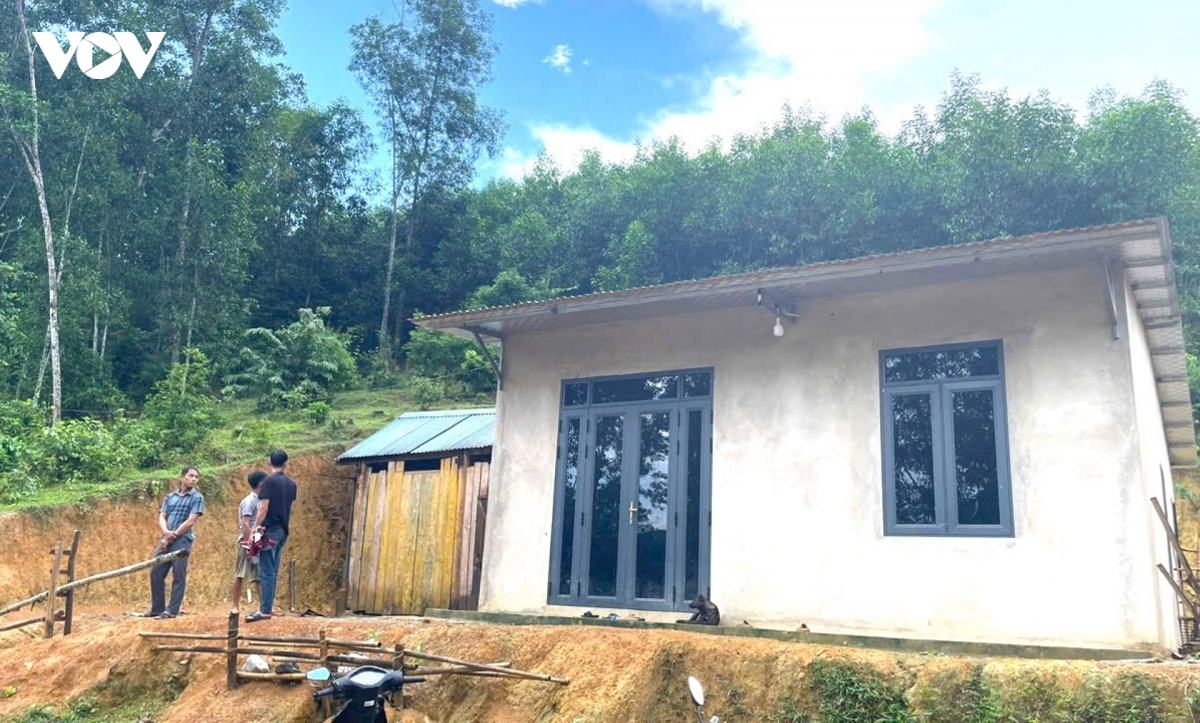
Tuyen Lam Commune is reviewing and digitizing all data on households located in areas at risk of landslides or isolation, in order to integrate this information into rapid response teams.
Following the merger, the total land area of Tuyen Lam Commune, Quang Tri Province, doubled, with residential clusters scattered across steep mountain slopes and deep ravines. Recent flood events in 2025 demonstrated that, given the deterioration of local loudspeaker systems, timely disaster warnings often failed to reach residents during emergencies.
Mr. Tran Manh Luc, Vice Chairman of the Tuyen Lam Commune People's Committee, explained that to ensure disaster prevention directives stayed ahead of events—without requiring hours of trekking through deep forests—the commune's leadership integrated information technology into their operational management.
"The commune's administrative area doubled after the merger, making digital transformation a key solution for managing disaster prevention. We have directed the review and digitization of data on all households located in areas at risk of landslides or isolation, integrating this information into the operations of rapid response teams. This has enabled the synchronized, accurate, and effective implementation of the 'four-on-the-spot' strategy," Mr. Luc stated.
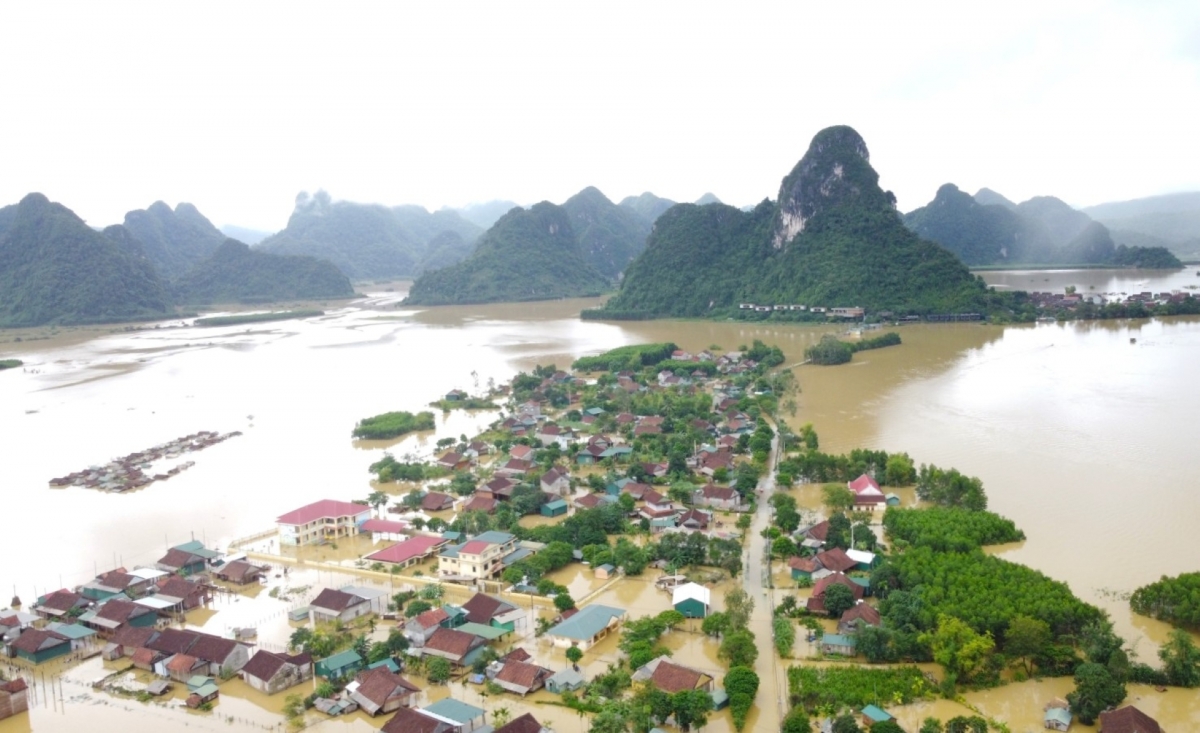
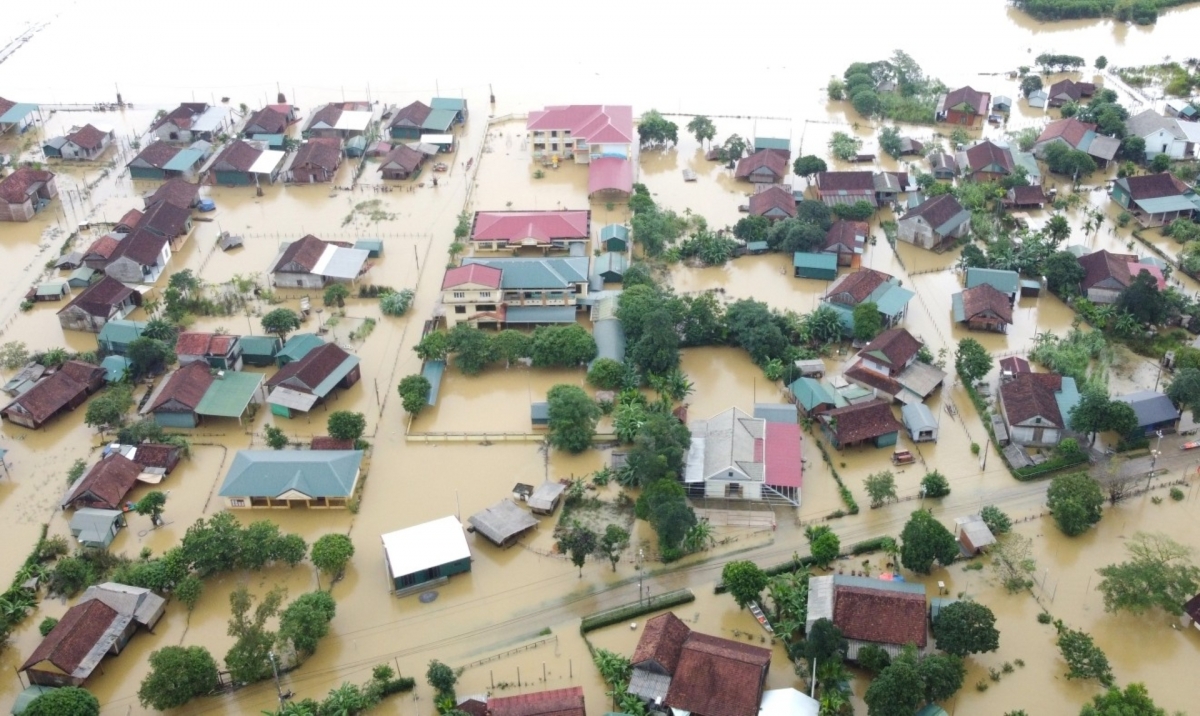
The residents of Tan Hoa frequently face flooding during the rainy season.
Tan Hoa Village in Kim Phu Commune, Quang Tri Province (formerly Tan Hoa Commune, Minh Hoa District, Quang Binh Province), is situated in an area often described as a "flood basin" or a natural "water catchment." The locality frequently faces severe flooding during the rainy season.
Having endured numerous devastating floods, the residents have gained valuable experience in disaster response and learned how to adapt to life alongside the floods. Today, the people of Tan Hoa no longer need to flee to high rocky outcrops for shelter or subsist on instant noodles while waiting for the waters to recede; floating houses have proven to be an effective solution for coping with floods.
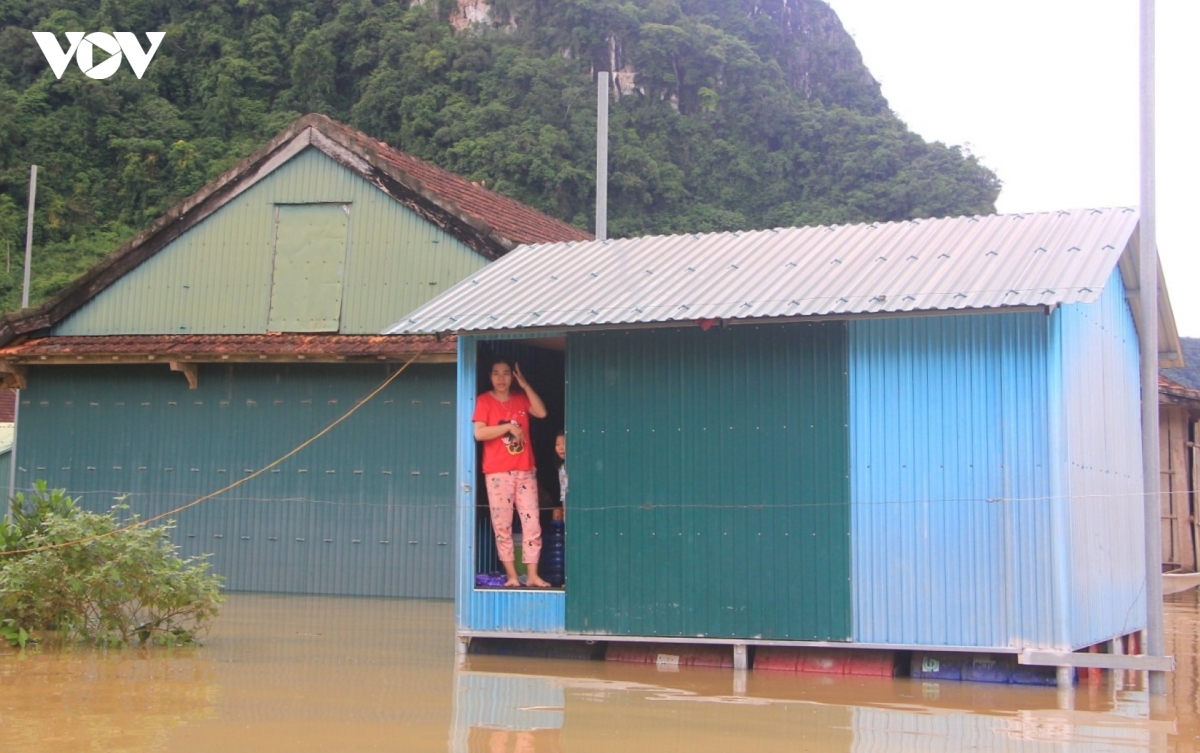
Residents of Tan Hoa feel more at ease having flood-proof floating houses.
The village has over 600 flood-resistant floating houses. Before the arrival of floods, residents move their belongings and assets onto these floating houses for safekeeping; this proactive approach ensures their safety. The floating house model in Tan Hoa not only enables residents to actively "live with the floods" but also minimizes property damage.
Mr. Dinh Xuan Vu, a resident of Tan Hoa Village, Kim Phu Commune, Quang Tri Province, noted that instead of having to evacuate to the mountains or face the risk of losing property and endangering their lives—as was the case in previous years—residents can now live in the flood-prone area with peace of mind. "My old house used to be submerged up to the roof. Now, basically, all the essentials for daily living are moved onto the floating house; it is very safe and sturdy."
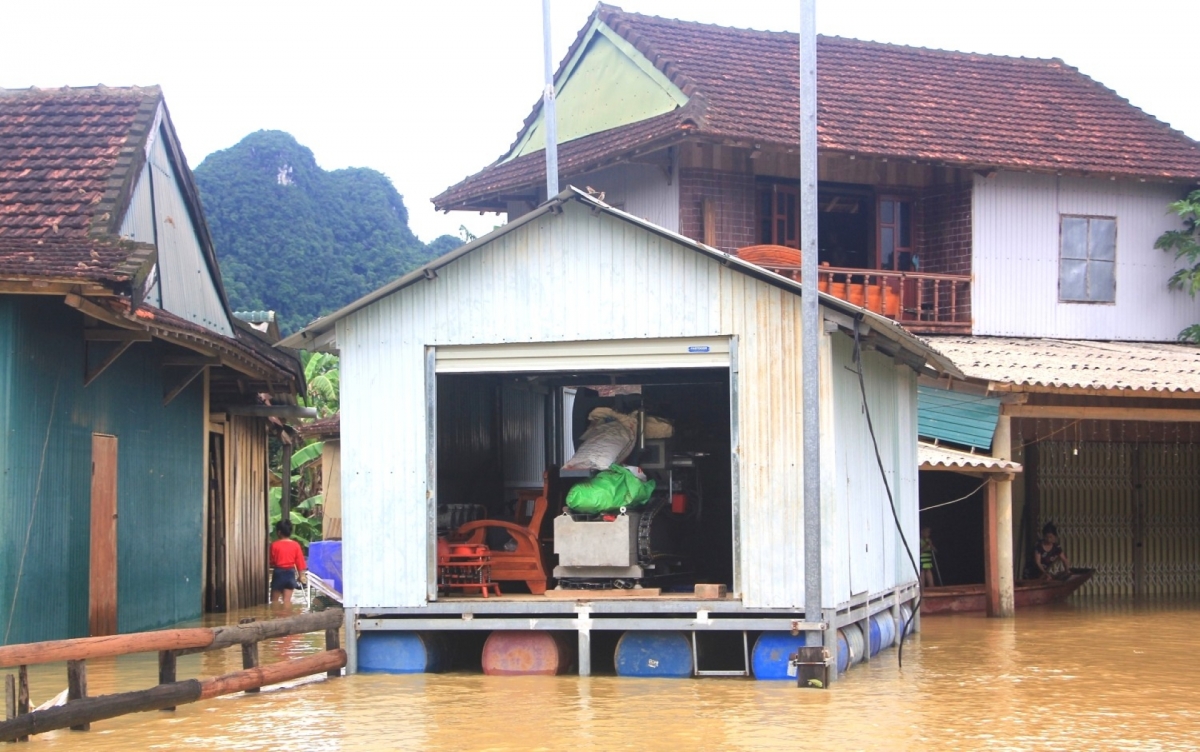
Residents of Tan Hoa move their belongings onto floating houses to escape the floods.
Having endured the historic floods of 2010, the residents of Tan Hoa village understand better than anyone that even a moment of complacency during a natural disaster can come at a heavy price. Consequently, they regularly inspect their floating houses, reinforce anchor points, and keep life jackets and contingency plans ready for any unexpected developments.
Mr. Nguyen Huu Tho, Vice Chairman of the People's Committee of Kim Phu Commune, Quang Tri Province, noted that proactive preparation has ensured residents are not caught off guard when floodwaters surge. During the days the village remains submerged, these floating houses serve as shelters and food storage areas, while also preserving a sense of normalcy for each family. "In the past, people were deeply anxious during the storm season, unsure of where to move their belongings or themselves. However, since 2010, they have taken a proactive approach—monitoring weather forecasts, inspecting their floating houses, and stocking up on food supplies in preparation for potential floods."

The preschool located in the heart of the flood zone is designed as a flood-resistant structure capable of adapting to natural disasters.
Floating houses serve not only as a lifeline for the residents of Tan Hoa village during natural disasters but also as a model for adapting to life in a flood-prone area. Floodwaters in Tan Hoa typically rise gradually without generating large waves; during floods, residents can live inside these floating homes and navigate safely using small boats.
Ms. Nguyen Hong Phuong, Deputy Director of the Quang Tri Department of Agriculture and Environment, remarked: “The floating house models in Tan Hoa represent an innovation by local residents and the community to proactively adapt to natural disasters. We view this not merely as a disaster prevention model, but as a demonstration of the local community's adaptability and creative initiative.”